
Storyline CMS
The tool behind the timeline
I built Storyline CMS to tell Arthur Black’s story, because no tool I could find would hold it: more than two hundred dated records, scanned pages beside their transcriptions, and the history happening around one man’s life. It is now open to anyone with research of their own to publish.
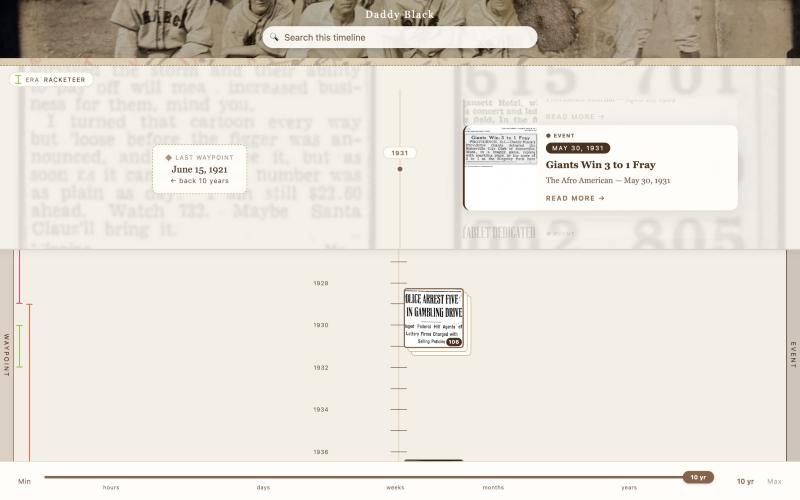
The Daddy Black timeline at 1931: the record in view sits above the run of years around it.
What it does
Built for research that is dense, dated and sourced.
Every record in its place
Each record sits on the timeline at its true date. Busy stretches gather into stacks you can open, so nothing gets lost.
The source beside the story
Attach scans, PDFs, photographs, audio and video to any record, with captions and credits.
Chapters and context
Divide a life into eras, and mark the wider world’s events across it.
Search and notes
Full-text search across every transcription, and notes that explain unfamiliar terms in place.
Care with hard material
Records with difficult content can carry a warning that readers see before they open them.
Readers can help
Visitors can suggest corrections and new sources, and collaborators can edit alongside you.
Who it’s for
- Museums and historical societies telling a local story
- Archives and special collections showing what their holdings reveal
- Historians, genealogists and families with research to share